Animal Kingdom for Young Learners
What child doesn’t love lions, elephants, and tiny tree frogs? Animal Kingdom for Young Learners is the perfect introduction to the wonders of wildlife for curious little minds. This engaging resource helps children discover how animals live, eat, and grow—all while building early science vocabulary. Whether you are a parent, preschool teacher, or homeschooler, Animal Kingdom for Young Learners turns curiosity into a joyful learning adventure.
What Is Animal Kingdom for Young Learners?
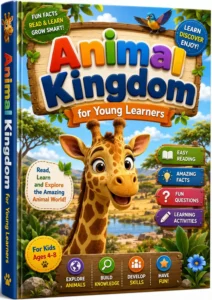
Animal Kingdom for Young Learners is a beautifully illustrated guide that classifies animals into simple, child‑friendly groups: mammals, birds, reptiles, amphibians, fish, and insects. Each section uses large pictures, easy sentences, and fun facts. For example, the mammal page explains that furry animals like dogs, cows, and bears feed their babies milk. The bird page shows feathers, beaks, and nests. Unlike heavy textbooks, Animal Kingdom for Young Learners uses comparison charts and “Can you find?” games to hold attention. The book also includes a glossary of animal names with pronunciation help, making it accessible for read‑aloud sessions.
Why This Approach Works
Young children learn best through vivid images and simple patterns. Animal Kingdom for Young Learners groups animals by observable traits—fur, scales, feathers, or wet skin—rather than scientific jargon. Research shows that children as young as three can sort animals correctly when given clear rules. This resource goes further by connecting each animal group to familiar experiences: “A fish breathes underwater, just like the goldfish in our classroom tank.” By the end of Animal Kingdom for Young Learners, a child can look at a squirrel and say, “That’s a mammal because it has fur and climbs trees.” That kind of confidence sparks a lifelong love for biology.
How to Use Animal Kingdom for Young Learners
Start with favorites – Ask your child, “What is your favorite animal?” Then turn to that section. Most children choose mammals or birds first.
Read one group per day – Spend 10–15 minutes on mammals, then the next day on reptiles. Animal Kingdom for Young Learners includes a tracking sticker for each group.
Play the sorting game – Gather toy animals or print pictures. Ask your child to place each one under the right category card.
Go on a backyard safari – After a lesson on insects, take a magnifying glass outside. Find ants, beetles, or caterpillars. Compare them to the photos in Animal Kingdom for Young Learners.
Create a “My Animal Book” – Have your child draw one animal from each group and copy its name.
Who Benefits Most?
Preschoolers (ages 3–5) – Builds observation and classification skills.
Kindergarten and first graders – Supports life science standards in a fun way.
Daycare centers – Perfect for circle time read‑alouds.
ESL students – Clear visuals and repeated sentence patterns build English vocabulary.
Final Thoughts
You don’t need a degree to teach science to a young child. Animal Kingdom for Young Learners gives you everything: beautiful pictures, simple facts, and playful activities. Every page turns “What is that?” into “I know what that is!” Open Animal Kingdom for Young Learners today, and watch your little explorer fall in love with the natural world—one lion, penguin, or ladybug at a time.